

An enterprise platform for connected commodity execution
COALISTIX is an enterprise platform for connected commodity and operational execution. The platform focuses on operating-model clarity, connected commercial and operational work, practical enterprise architecture, and responsible technology adoption.
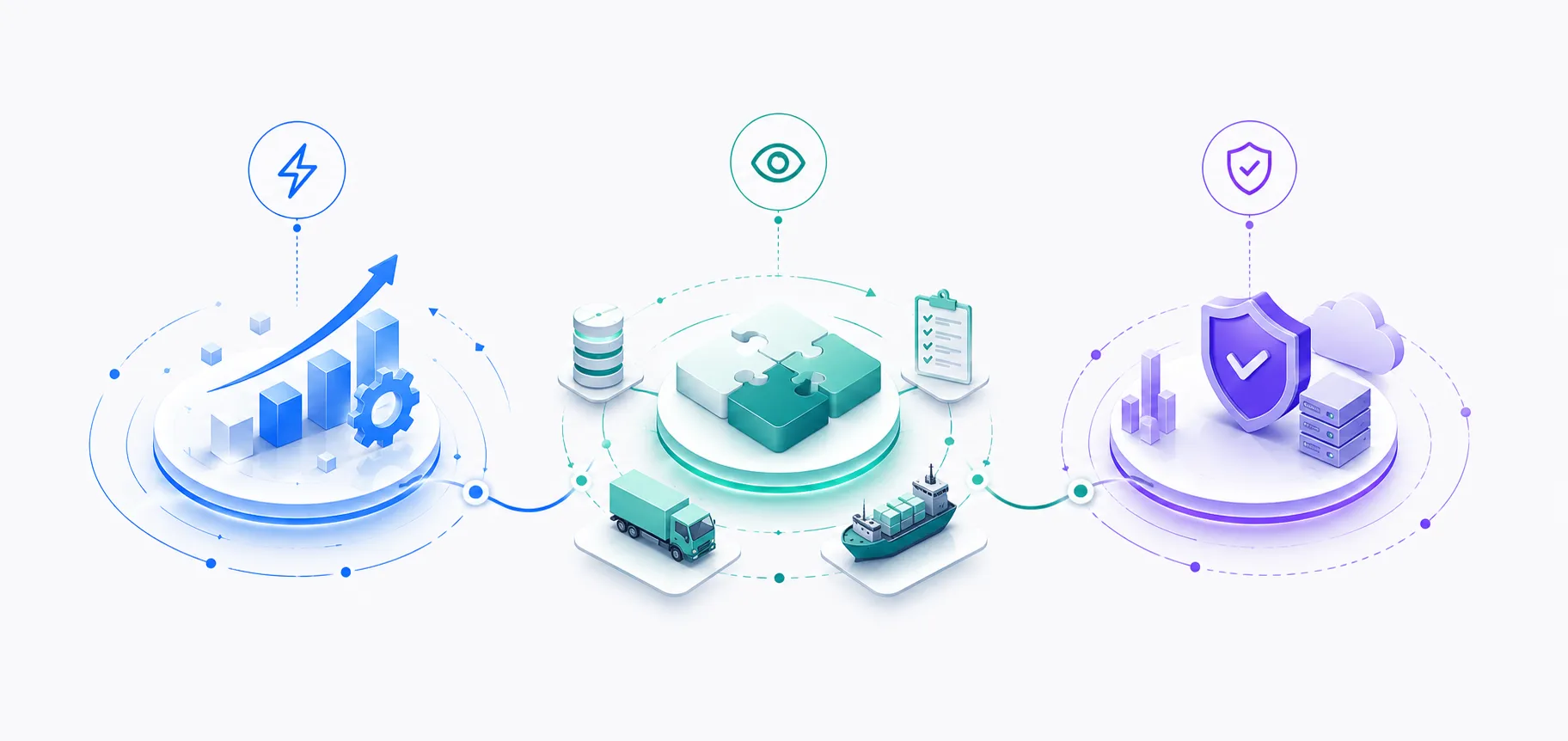
Business transformation
COALISTIX is shaped around practical enterprise change, not technology novelty for its own sake.
Operating-model clarity
The platform focuses on how commercial, contractual, logistics, and operational work connect across the business.
Responsible technology adoption
Technology direction is evaluated through business context, enterprise discipline, and long-term usefulness.
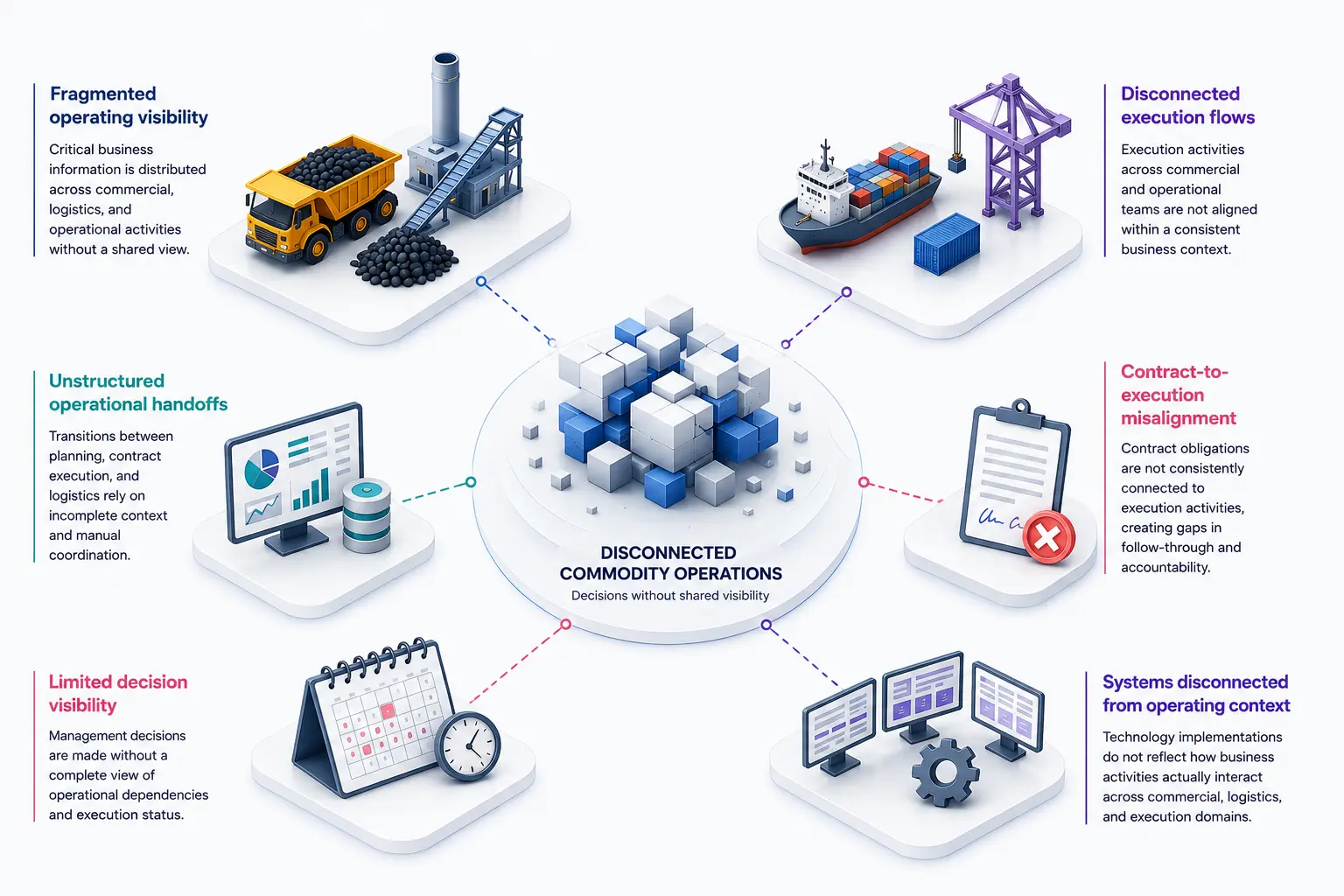
Commodity operations break down when decisions are made without shared visibility
COALISTIX was created to address a structural gap in how commodity operations are managed.
Across mining, logistics, and trading environments, critical activities have long been executed through fragmented systems and disconnected workflows. Visibility is limited, coordination is inconsistent, and decisions are often made without a complete understanding of what is happening across the business.
The issue was never the lack of data.
It was the lack of decision clarity.
As operations scale, this gap becomes more pronounced. Execution risks emerge without early visibility, operational issues are identified after impact, and commercial opportunities are constrained by disconnected processes.
Traditional systems were not designed to solve this problem.
They record transactions, but they do not provide the shared context required to manage a commodity business as a coordinated operation.
COALISTIX takes a different approach.
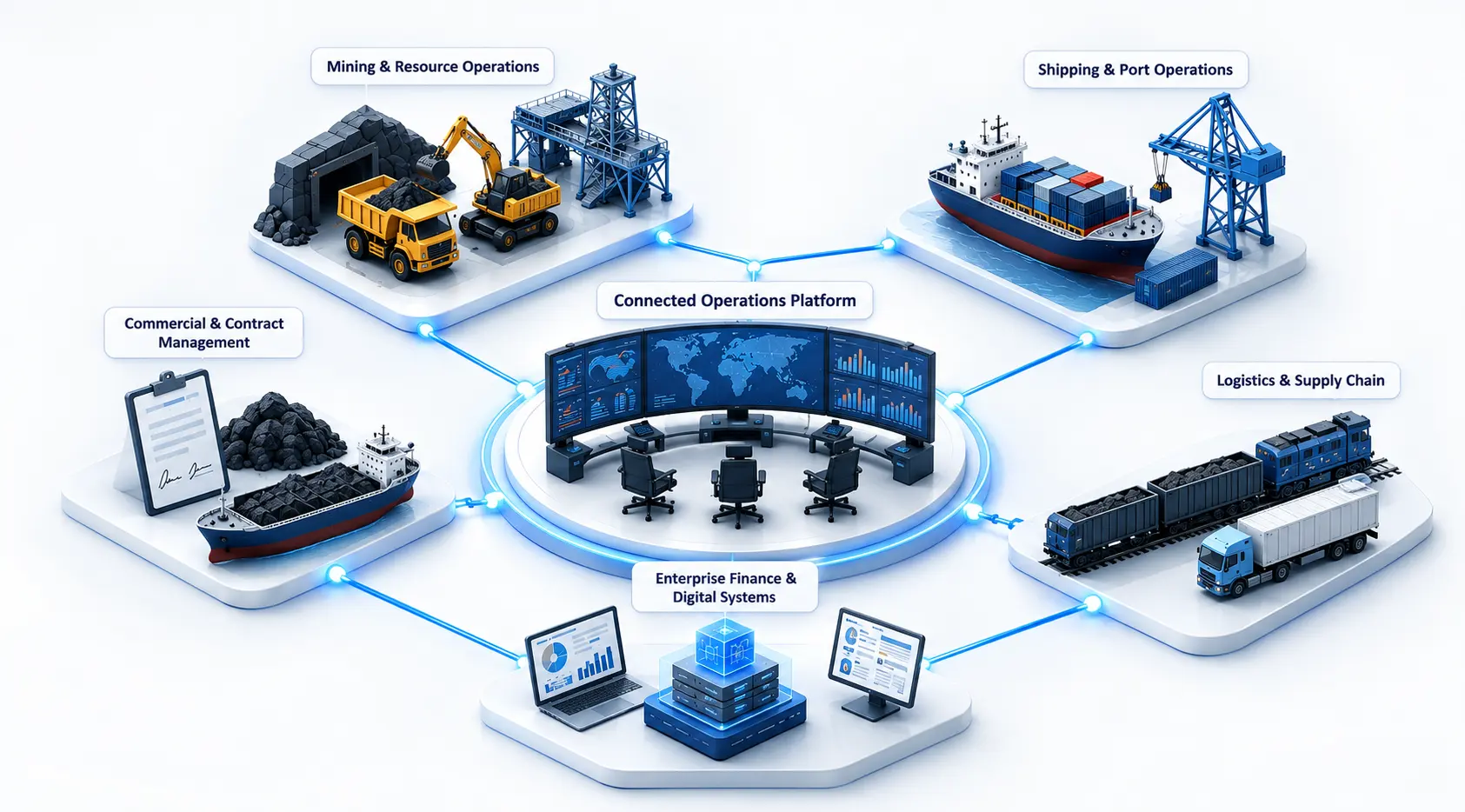
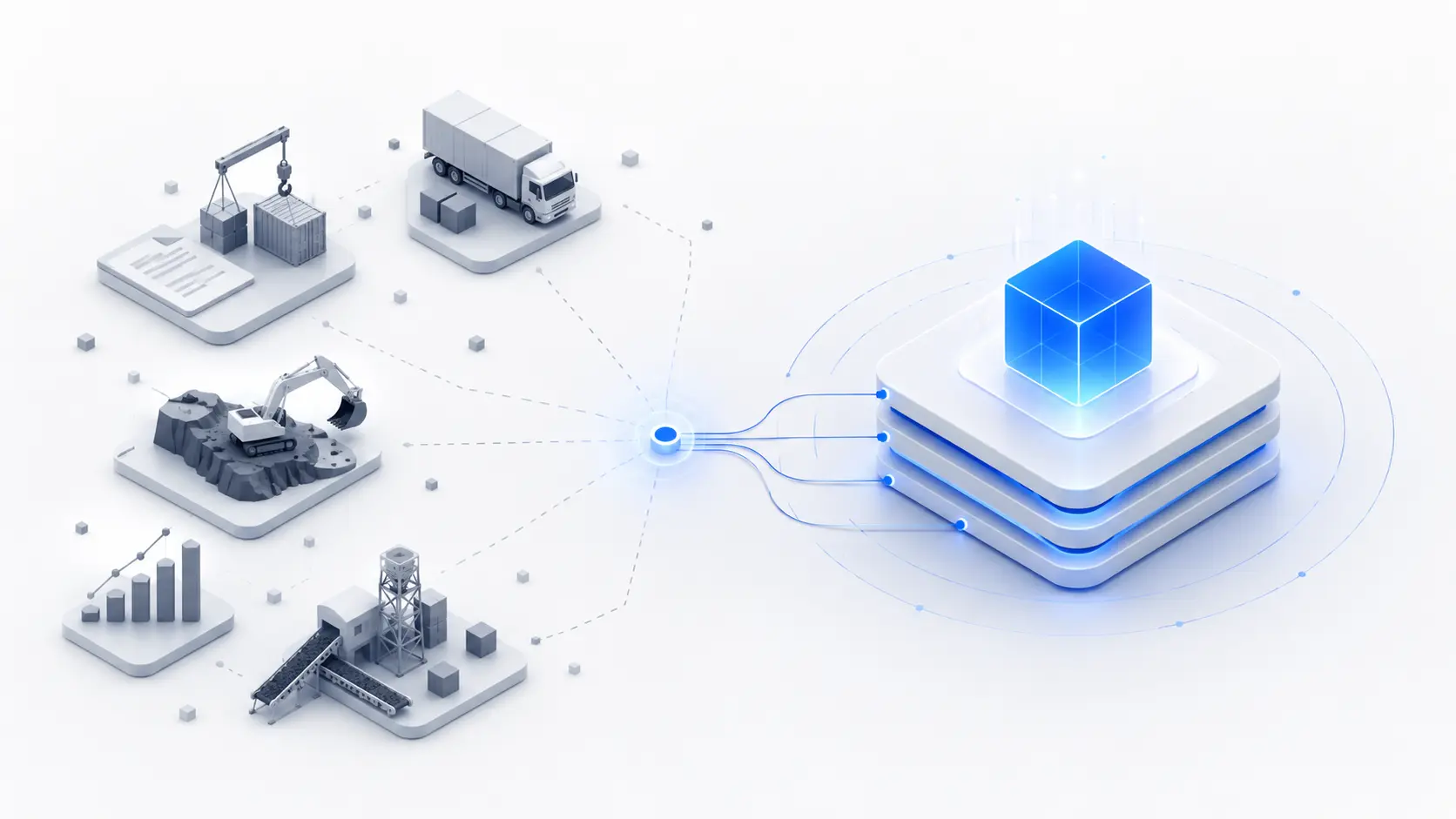
It brings commercial activity, operational execution, and logistics movement into a connected operating context — enabling organizations to move from fragmented visibility toward coordinated, intelligence-driven decision-making.
This is not simply a system improvement.
It represents a fundamental shift in how commodity operations are understood and managed.
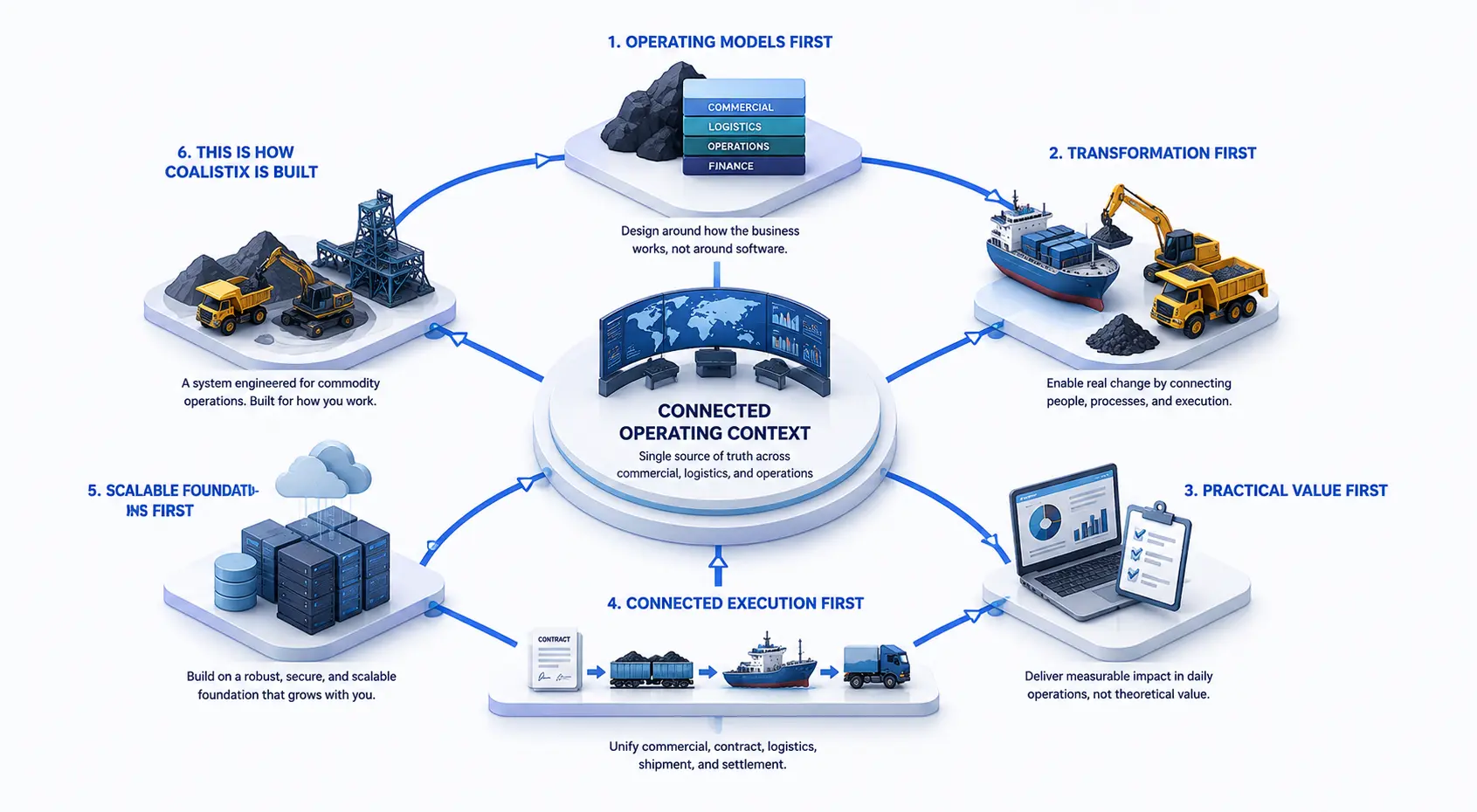
How COALISTIX approaches operations is fundamentally different from traditional systems.
Operations define the system. Not the other way around.
Technology must reflect how the business actually runs. It must not force the business to adapt to software constraints.
Visibility must exist before decisions are made.
Without shared operational context, coordination breaks down and decisions lose reliability.
Execution matters more than reporting.
Capturing data is not enough. Organizations need to understand what is happening and act while it still matters.
Every capability must solve a real operational problem.
Functionality is not added for completeness. It exists for practical impact on daily operations.
Coordination is the foundation of control.
Commercial, logistics, and operational activities must operate within a shared context to maintain execution discipline.
This is how COALISTIX is built.
It is not a collection of features. It is a system aligned with how commodity operations actually work.
This perspective comes from direct experience across commodity operations.
It comes from working within mining operations, contractor environments, stockpile management, rail logistics, and coal trading activities. Each environment operates with different priorities. They are connected by the same execution challenges.
The same problems appeared repeatedly across different parts of the business.
Limited visibility, delayed decisions, and disconnected workflows were not isolated issues. They were systemic.
This experience spans multiple functions. It includes exposure to production, logistics coordination, commercial execution, and operational oversight across the full supply chain.
Understanding comes from seeing how these functions interact under real conditions.
Not in reports, but in daily operations where timing, coordination, and execution directly affect outcomes.
International commodity trading experience introduces additional complexity. It introduces contract complexity, counterparty dynamics, and the need for tighter coordination between commercial intent and operational execution.
This is the foundation of the COALISTIX perspective.
It is shaped by observing how operations actually run, where they fail, and what is required to manage them effectively in practice.
- Coal and nickel operating contexts
- Commodity trading and commercial operations
- Contract execution and shipment operations
- Logistics coordination and enterprise operations
- Digital transformation and practical enterprise architecture
Joko Sutrisno
Founder & Enterprise Solution Architect
This perspective did not begin with software. It emerged from operating reality.
Across commodity trading, mining operations, logistics coordination, and contract execution, the same challenges continued to appear. Critical decisions were made without complete visibility. Coordination depended on fragmented information. Execution outcomes were often determined by gaps between commercial intent and operational follow-through.
These were not isolated inefficiencies. They were structural patterns.
Different environments, different teams, and different systems still led to the same operational limitations.
Over time, one principle became clear. Technology alone does not resolve these challenges. Systems that do not reflect how operations actually run only add complexity.
Lasting improvement requires aligning systems with the way the business operates.
Not by forcing change through software, but by building around real operating structures, decisions, and execution flows.
This is the origin of COALISTIX. It is built from observing how operations function in practice, where coordination breaks down, and what is required to manage them as a connected system.
A long-term foundation for managing commodity operations as a connected system.
COALISTIX is not built as a collection of features. It is structured as an operating foundation that reflects how commodity businesses actually run, where commercial intent, logistics execution, and operational control are inherently connected.
As operations scale, the challenge is not only managing more data, but preserving alignment across decisions, dependencies, and execution outcomes. Fragmentation increases as systems grow without a shared operating context.
Long-term transformation depends on maintaining that connection over time.
Without a unified operating model, systems diverge, coordination weakens, and execution risk compounds as the business evolves.
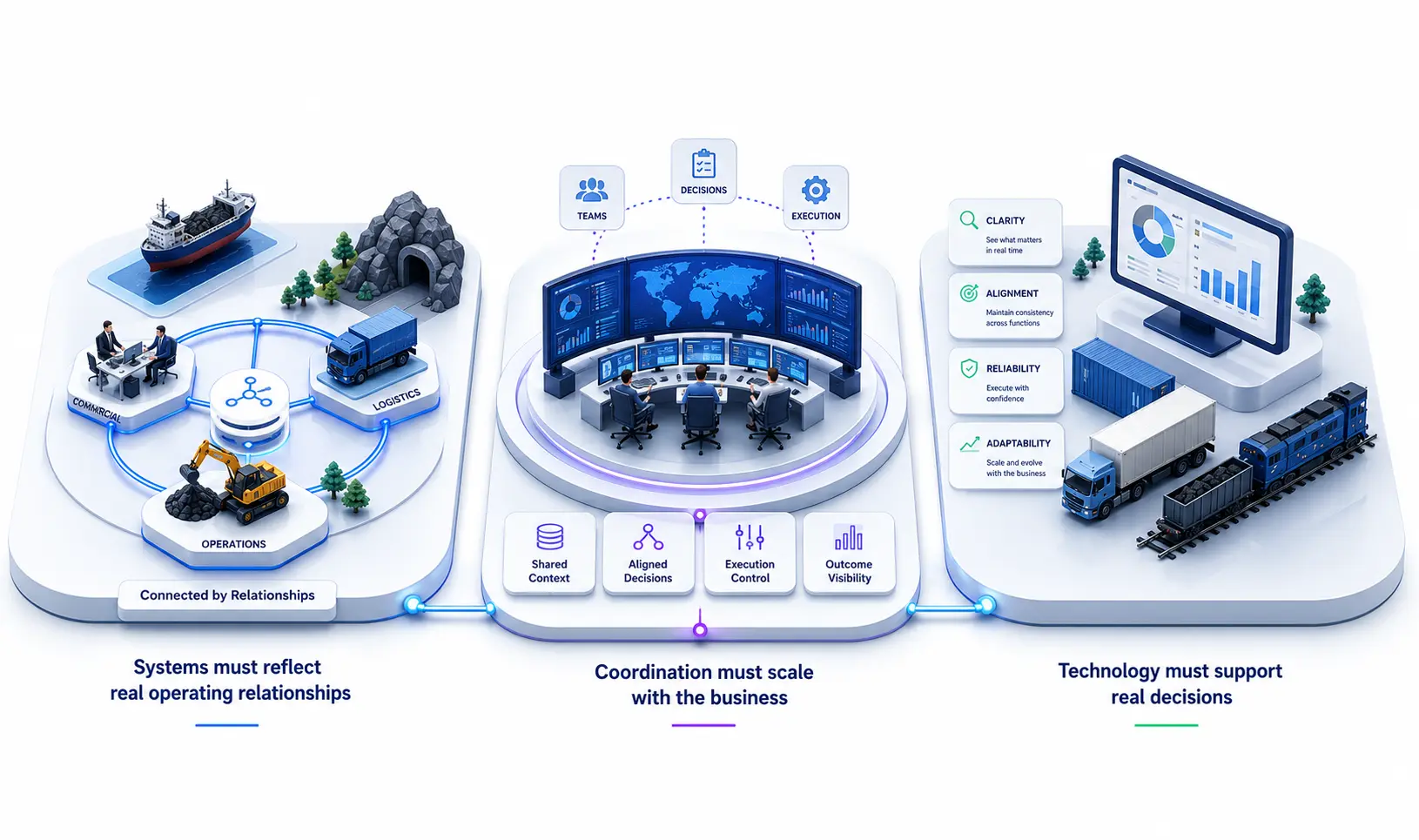
Systems must reflect real operating relationships
Business systems must be structured around how activities actually connect across commercial, logistics, and execution domains, not separated into isolated functional views.
Coordination must scale with the business
As operations grow, coordination complexity increases. Maintaining alignment across teams, decisions, and execution flows becomes a structural requirement, not a process improvement.
Technology must support real decisions
Technology should enhance how decisions are made within real operating context, prioritizing clarity, alignment, and execution reliability over feature expansion.