

Structured solutions built on a shared operating model
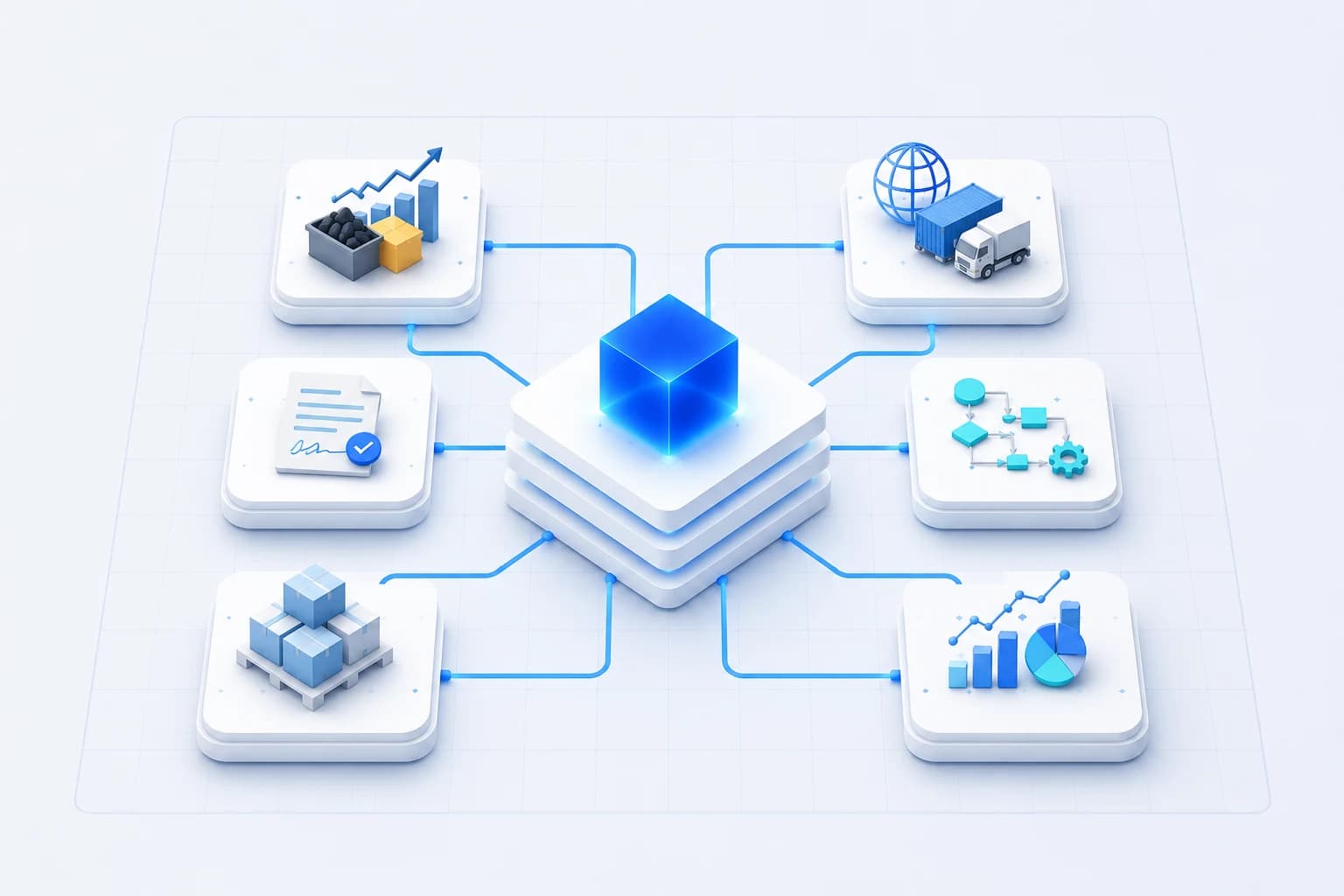
COALISTIX solutions are designed to align commercial, logistics, and operational execution within a unified operating model, enabling coordinated workflows, shared context, and consistent execution across the business.
Commercial and execution alignment
Connects commercial decisions with downstream execution activities so contracts, logistics, and operations follow a consistent business context.
Shared operating context
Establishes a unified view of trading, logistics, and operational activities so teams work from the same structured business context.
Coordinated decision and execution
Aligns decision-making with execution through a governed operating model that reduces fragmentation and improves operational follow-through.
Solution domains aligned with how the business operates
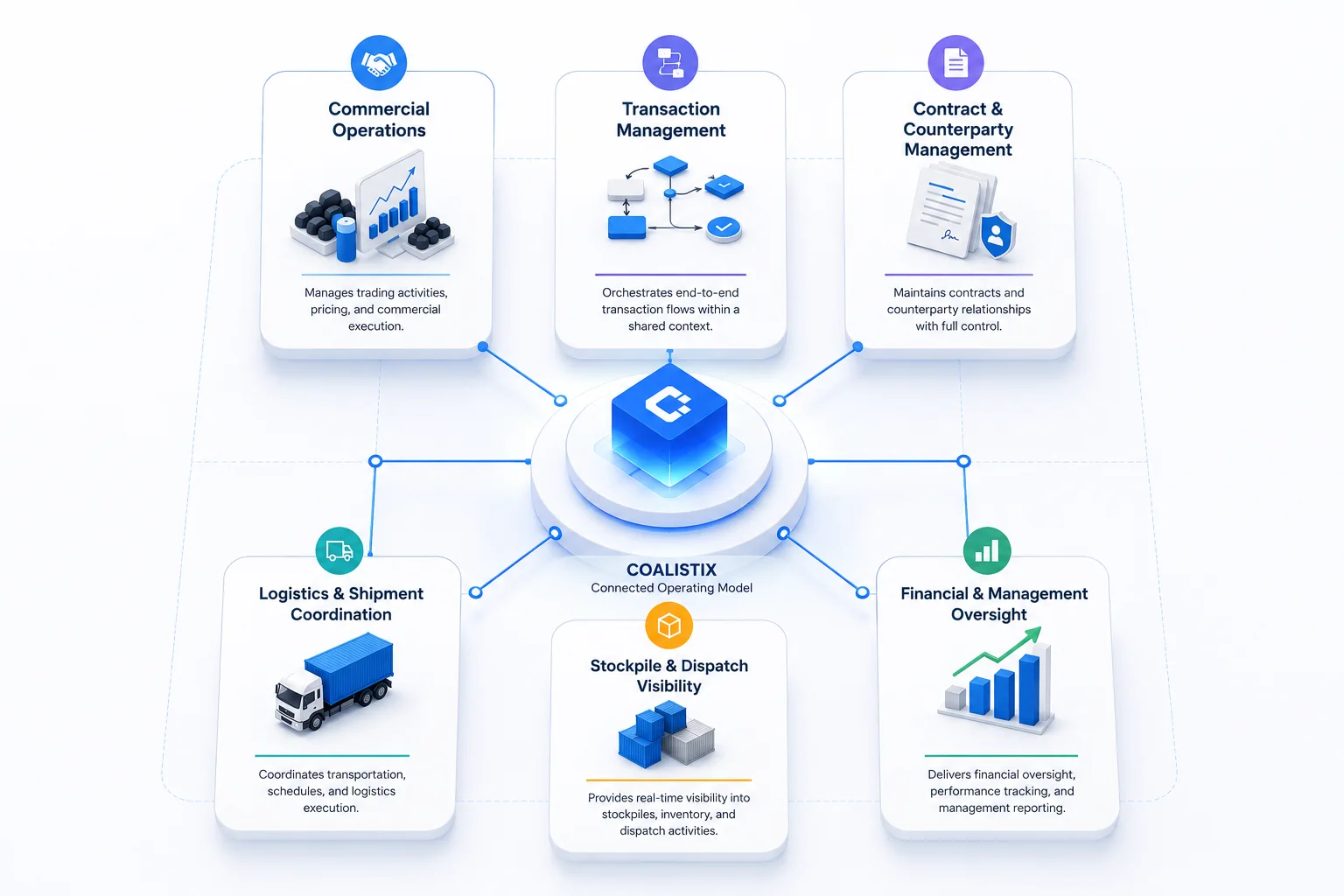
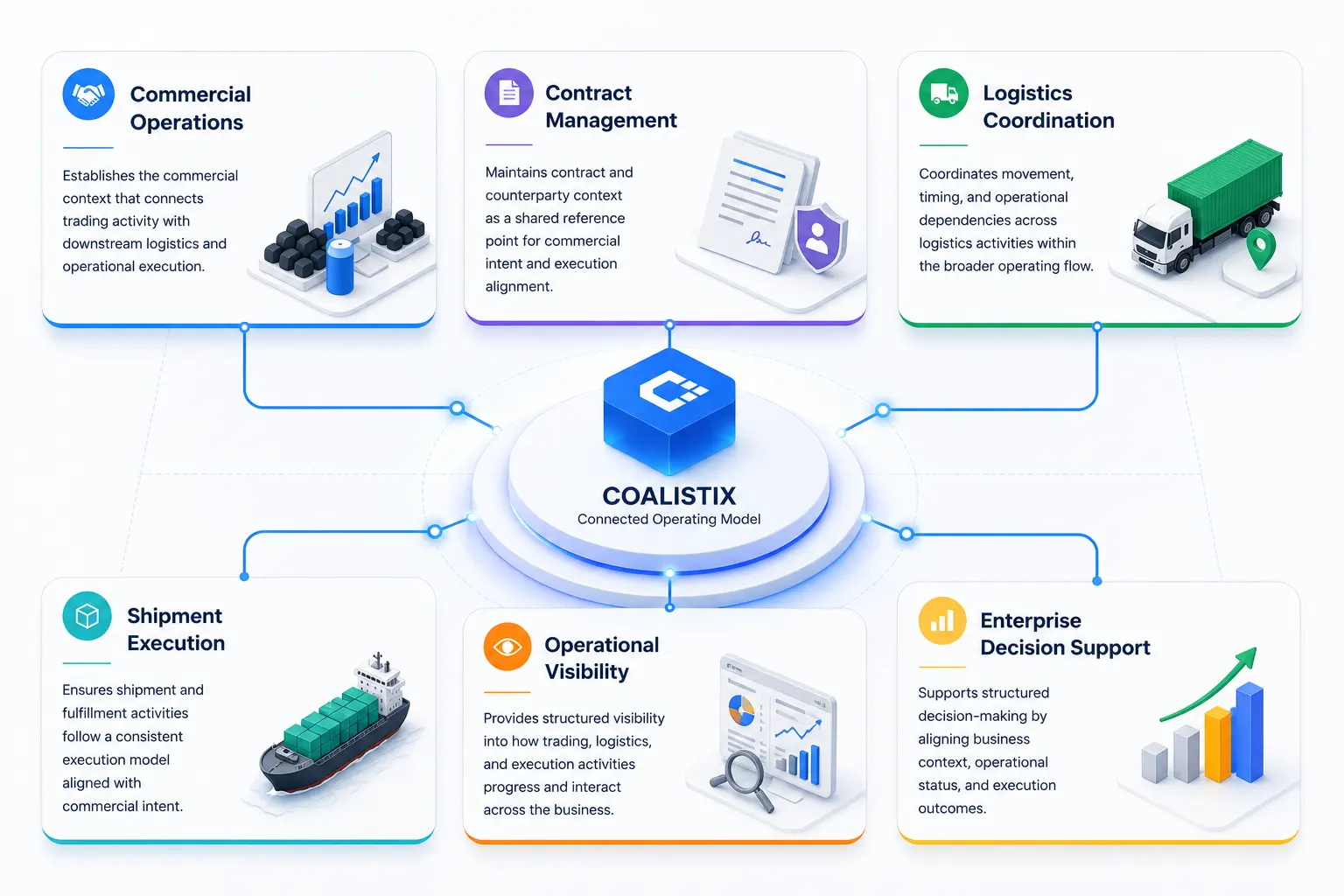
COALISTIX structures solutions as connected operating domains that reflect how commercial, logistics, and operational activities work together within a shared operating model, enabling coordinated execution and consistent operational control.
Each domain represents a critical part of the operating workflow, structured to maintain alignment between decisions and execution across the business.
Core business capabilities within a connected operating model
Each domain represents a core capability within the operating model, structuring how commercial, logistics, and operational activities connect to support coordinated execution and informed decision-making.
From fragmented evaluation to structured business understanding
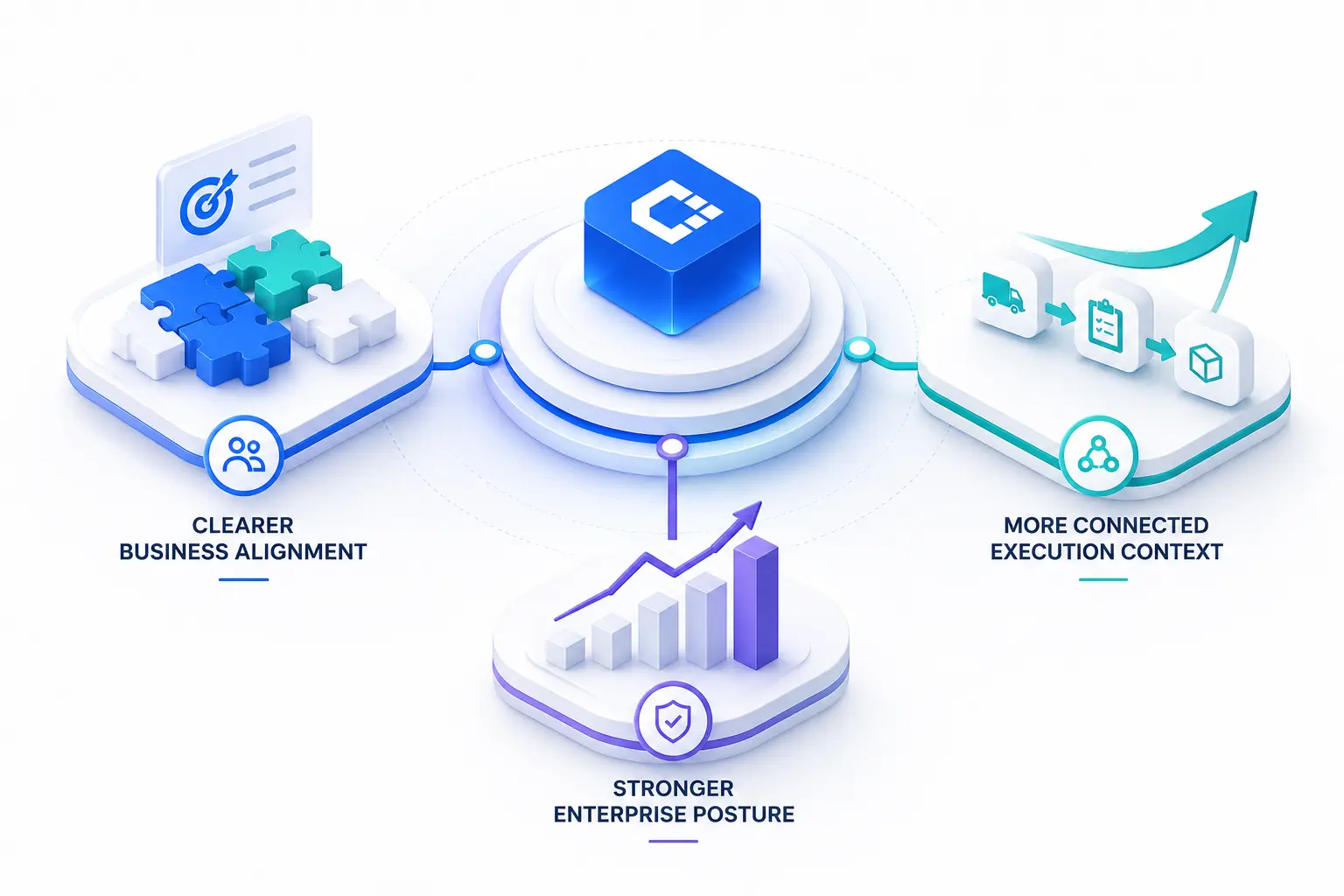
COALISTIX enables leaders to evaluate transformation through connected business structure, shared operating context, and disciplined execution rather than isolated systems or overstated outcomes.
Clearer business alignment
Solution domains are structured around how commercial, logistics, and operational activities actually work together, maintaining alignment between business intent and execution.
More connected execution context
A shared operating model ensures that decisions, dependencies, and execution progress are understood within one consistent business context.
Stronger enterprise posture
A structured approach to evaluation supports more credible decision-making, grounded in business operations rather than abstract system capabilities.